How to Sell to School Districts: A Complete Guide

Selling to school districts means navigating a buying process designed for accountability, not speed. Committees evaluate options, boards approve budgets, and procurement rules dictate timelines—which is why the average K-12 deal takes 6–12 months to close.
The vendors who win district contracts consistently aren't necessarily the ones with the best product. They're the ones who understand how districts buy, who makes decisions, and when to show up. This guide covers the full district sales process: from mapping decision-makers and timing your outreach to identifying buying signals and building a scalable pipeline.
Why Selling to School Districts Is Uniquely Challenging
School district sales cycles typically run 6–12 months, and some deals stretch past 24 months. The reason comes down to how districts buy: committees review options, boards approve budgets, and procurement rules dictate timelines. You're not selling to one person who can say yes. You're navigating a system designed for accountability, not speed.
Long and Unpredictable Sales Cycles
District deals move on the district's calendar, not yours. A curriculum director might love your product in October, but the budget for that category was locked in April. Even with a strong champion, the approval process involves multiple checkpoints that can add weeks or months.
The unpredictability comes from external factors too. A superintendent leaves, and priorities shift—something that occurred in 23% of the nation's largest districts in 2024–25. State funding gets delayed, and purchases freeze. You can do everything right and still wait longer than expected.
Multiple Stakeholders on Every Deal
A typical district purchase involves three to seven people across different departments. The teacher who uses your product rarely has authority to buy it. The administrator who controls the budget often relies on recommendations from specialists who evaluate options.
- Curriculum purchases: involve directors, coaches, and sometimes teacher committees
- Technology purchases: require sign-off from IT, finance, and often legal
- Professional development: typically flows through HR or curriculum leadership
Building consensus across all of them takes time and intentional relationship-building.
Budget Constraints and Funding Uncertainty
District budgets are public documents, which means you can look up exactly how much a district allocated to different categories last year. The challenge is that most categories are already committed to existing contracts, salaries, and ongoing expenses.
Funding can also shift mid-year. Enrollment drops reduce state allocations. A bond measure fails, and capital projects disappear. A project that looked funded in January might lose priority by March if something else becomes urgent.
Compliance and Procurement Requirements
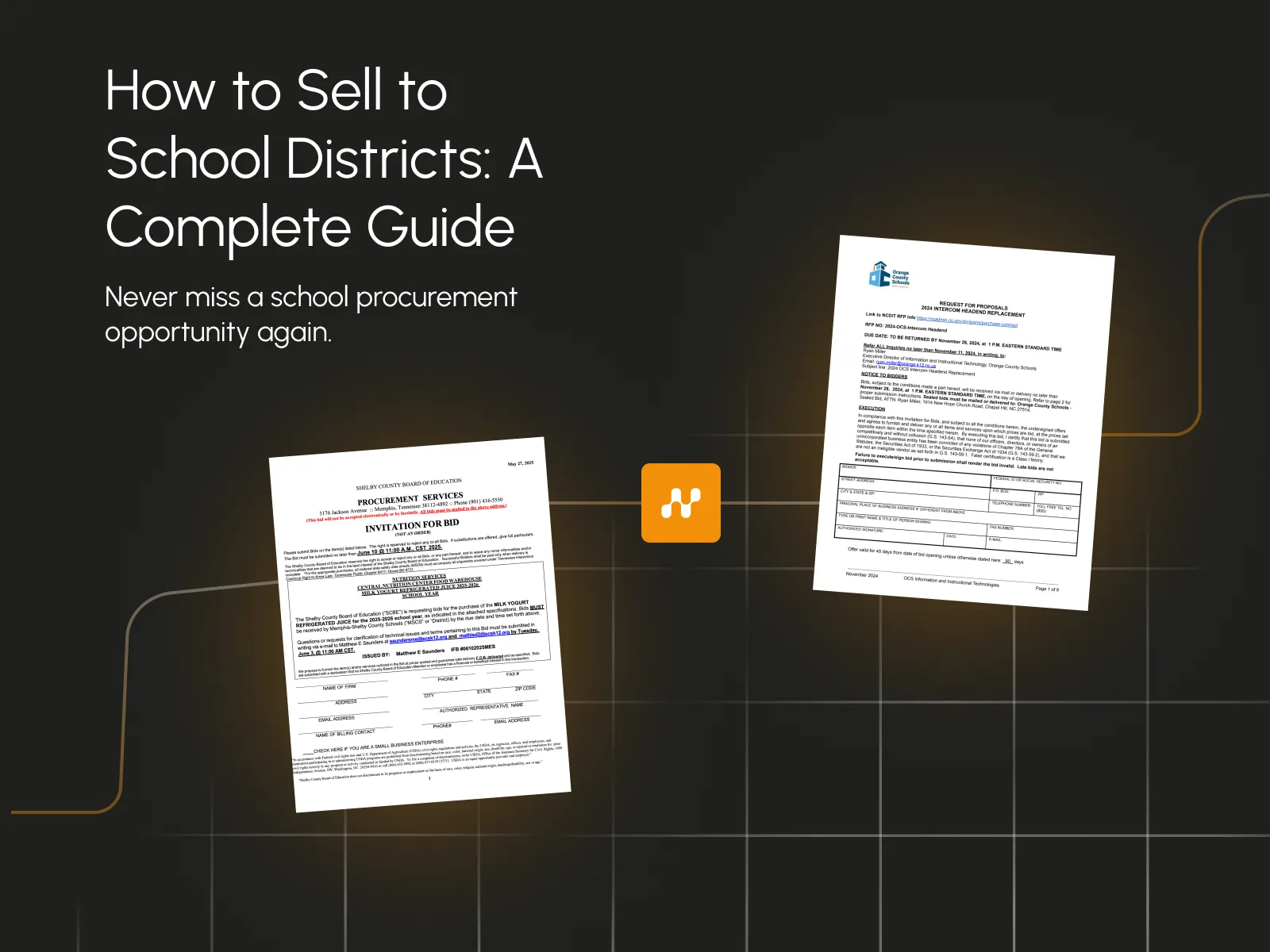
Districts follow purchasing rules that vary by state and sometimes by district. Purchases above a certain dollar threshold—often somewhere between $25,000 and $50,000—typically require a formal RFP (Request for Proposal) or competitive bidding process.
Smaller purchases might allow what's called sole-source procurement, where a district can buy directly from a vendor without competitive bids. However, even sole-source purchases usually require the vendor to be registered and approved.
Who Makes Purchasing Decisions in School Districts
The person who uses your product is almost never the person who signs the contract. Mapping the buying committee early prevents wasted outreach to people who can't actually move a deal forward.
Superintendents and Cabinet Leaders
Superintendents set district-wide priorities and approve large budget items. They're typically the final signature on major contracts, but they rarely evaluate vendors directly. Their time is limited, so building a relationship early—before you're actively selling—creates an advantage when decisions come up.
Curriculum and Instruction Directors
Curriculum directors influence purchases related to instructional materials, assessments, and professional development. If you're selling anything connected to teaching and learning, this role is central to your deal. They often lead evaluation committees and make recommendations that superintendents approve.
Chief Technology Officers and IT Directors
CTOs and IT directors control decisions about edtech, infrastructure, and data security. They have effective veto power over anything that touches student data or connects to district networks. Ignoring them is a common and expensive mistake—even if your primary buyer is in curriculum or instruction.
Principals and Building Administrators
Principals often serve as early champions. A successful pilot at one school can lead to district-wide adoption, so building relationships at the building level creates a path to larger deals. Principals also influence which products teachers request and which initiatives get prioritized.
School Board Members and Their Role
School boards approve budgets and major contracts, but they don't typically evaluate vendors or make purchasing recommendations. What they do provide is visibility into district priorities. Board meeting agendas and minutes are public records that reveal upcoming initiatives, budget allocations, and strategic plans.
How the School District Buying Cycle Works
Most districts operate on a July–June fiscal year, and the purchasing rhythm follows a predictable pattern once you learn it.
Fiscal Year Timelines and Budget Planning
Budget planning typically happens between January and April. During this window, district leaders decide which initiatives to fund for the upcoming year. By the time summer arrives, most budget decisions are already made.
If you're not in conversations during budget planning, you're competing for whatever discretionary funds remain—which is usually not much.
RFP Windows and Procurement Deadlines
RFPs for the next fiscal year typically appear between April and June. Here's the thing: by the time an RFP is published, the district often has a preferred vendor in mind. The RFP process is required for compliance, but the real evaluation happened earlier.
Showing up after the RFP drops puts you at a disadvantage. The vendors who shaped the requirements during budget planning are already ahead.
Pilot Programs and Evaluation Periods
Districts rarely commit to large purchases without testing first. Pilots typically run during the fall semester, giving evaluators enough time to assess results before the next budget cycle begins.
Structuring a pilot with clear success metrics and a defined decision timeline increases your chances of converting to a full contract. Without those guardrails, pilots can drift indefinitely.
Contract Renewals and Expiration Dates
Existing contracts represent both obstacles and opportunities. If a district is happy with their current vendor, renewal is the path of least resistance. But if you know when a contract expires, you can engage months before the renewal decision happens.
Renewal decisions often occur 3–6 months before expiration. Waiting until a contract actually ends means missing the window entirely.
Key dates in the district buying cycle:
- January–March: Budget planning and priority setting
- April–June: RFP releases and vendor evaluations
- July–August: New fiscal year begins, contracts executed
- September–November: Pilots and implementations
School District Funding Sources You Need to Know
Different funding sources have different rules, timelines, and restrictions. Aligning your pitch to the right funding category makes your product easier to buy.
General Fund and Local Tax Revenue
The general fund covers most operational expenses and comes primarily from local property taxes and state allocations. It's the most competitive budget category because every vendor is competing for the same dollars.
Title I and Federal Program Dollars
Title I provides federal funding to schools serving low-income students. The funds have specific restrictions on allowable uses, so confirming your product qualifies before pitching saves time for everyone.
ESSER and Pandemic Relief Funding
ESSER (Elementary and Secondary School Emergency Relief) funds—totaling $189.5 billion—came with spending deadlines and defined allowable uses. Districts with remaining ESSER funds face pressure to spend before the money expires, which can create urgency for purchases that qualify.
E-Rate for Technology Purchases
E-Rate is a federal program with an annual funding cap of $4.456 billion that subsidizes internet connectivity and certain technology purchases for schools. The program covers between 20% and 90% of eligible costs depending on the district's demographics. Application windows are annual, and only specific product categories qualify.
How to Identify Districts Ready to Buy
Not every district in your territory is ready to buy right now. Focusing on districts with active buying signals—public indicators of planned or funded purchases—concentrates your effort where it can actually produce results.
Tracking Expiring Contracts in Your Territory
Contract data is public record. Board meeting minutes, state procurement databases, and spending transparency portals reveal when existing contracts expire. An expiring contract with a competitor is your window for displacement.
Monitoring Board Meetings and Budget Approvals
Board agendas and minutes reveal upcoming initiatives and budget allocations. A line item for "student information system replacement" or "new ELA curriculum" signals active buying intent. This information is freely available on district websites.
Using Buying Signals to Prioritize Accounts
Buying signals—whether from procurement records or local news coverage—are public indicators that a district is actively planning or funding a purchase:
- Contract expirations: opportunities to displace incumbents
- Budget line items: new spending categories or increases from prior year
- Board approvals: authorized projects actively seeking vendors
- Leadership changes: new administrators often bring new priorities
Tip: NationGraph automates signal monitoring across territories, surfacing opportunities within minutes of public records changing.
How to Become an Approved Vendor for Schools
Approved vendor status usually starts with registering in each district's vendor portal and submitting standard paperwork such as tax forms, insurance certificates, and references. Districts also require liability and workers' compensation coverage, background checks for on-site staff, and student data privacy compliance. Cooperative purchasing contracts offer another route, letting districts buy without running separate procurement. Registrations often renew annually.
Before you can sell to most districts, you'll need to complete vendor registration and meet compliance requirements.
State and Cooperative Purchasing Contracts
Cooperative contracts—like TIPS, PEPPM, or NASPO—offer pre-negotiated terms that districts can use without running their own RFP. Getting on a cooperative contract shortens your sales cycle because districts can purchase directly without additional procurement steps.
District Vendor Registration Processes
Most districts maintain approved vendor lists and require registration before purchasing. Typical requirements include W-9 forms, insurance certificates, and references. Many districts use vendor portals that require annual renewal—missing the renewal deadline can lock you out of opportunities.
Insurance, Background Checks, and Compliance
Common requirements include general liability insurance, workers' compensation coverage, and background checks for any staff who will be on-site. Edtech vendors also face student data privacy requirements under FERPA and various state-specific laws.
Proven Strategies for Selling to Schools
1. Align Outreach to Procurement Cycles
Timing matters more than volume. Reaching out during budget planning (January–March) puts you in conversations before decisions are made. Reaching out in September means waiting until the next cycle.
2. Lead with Student Outcomes Over Features
Educators respond to impact on students, not product specifications. Frame every outreach message around problems solved and results achieved rather than features and capabilities.
3. Offer Pilots and Low-Risk Entry Points
Districts prefer to test before committing. A well-structured pilot with clear success metrics and a defined decision timeline moves deals forward. An open-ended pilot can drift for years.
4. Leverage Reference Districts and Social Proof
District leaders trust recommendations from peers in similar situations. Building a reference network of districts with comparable size, demographics, or regional context accelerates trust with new prospects.
5. Personalize Messaging with District Context
Generic outreach fails in K-12 sales. Referencing a specific district initiative, a recent board decision, or a published strategic plan demonstrates that you've done your homework.
Common Mistakes When Selling to School Districts
- Missing procurement windows: Engaging after the RFP drops often means the decision is already made
- Pitching features instead of outcomes: Educators tune out product specs and respond to student impact
- Targeting the wrong stakeholders: Reaching someone without purchasing authority wastes time and can close doors
- Relying on outdated contact data: K-12 has high administrator turnover, and last year's contact list may be obsolete
How to Build a Scalable School District Pipeline
Selling to school districts requires timing, targeting, and visibility across your territory. Manual research works for a handful of accounts, but it doesn't scale when you're covering hundreds or thousands of districts.
Teams that build consistent pipeline in K-12 typically rely on:
- Always-on territory monitoring: catching opportunities as they emerge in public records
- Verified decision-maker data: reaching the right people without bounced emails and wrong numbers
- Signal-driven prioritization: focusing effort on accounts with active buying intent
NationGraph is built specifically for SLED sales teams to automate research, surface buying signals, and build pipeline faster—turning fragmented public data into actionable opportunities.
FAQs About Selling to School Districts
How long does it typically take to close a deal with a school district?
Most district sales cycles run 6–12 months, though complex deals involving large contracts or multiple stakeholders can extend to 18–24 months. The timeline depends heavily on contract size, procurement requirements, and where you enter the budget cycle.
What is the best time of year to contact school districts about new purchases?
Budget planning season, typically January through April, is when districts set priorities for the upcoming fiscal year. Outreach during this window puts you in conversations before decisions are locked.
Do vendors need to respond to an RFP to win a school district contract?
Not always. Many districts allow sole-source purchasing for amounts below their competitive bidding threshold or when a product meets unique requirements. Larger contracts typically require an RFP or formal bidding process.
How can vendors find out which districts currently use a competitor's product?
Contract data is public record. Board meeting minutes, state procurement databases, and spending transparency portals reveal current vendor relationships, contract values, and expiration dates





Find your first opportunity in minutes