Budget Season Is Pipeline Season: Watch for Signals and Prepare to Take Action

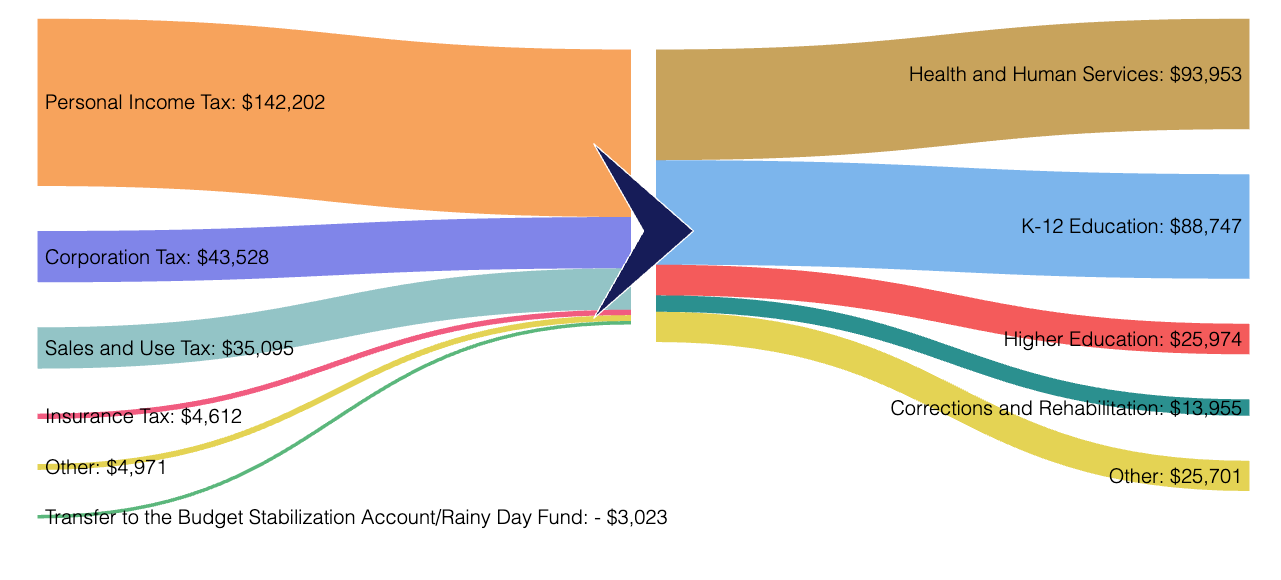
Budget season = pipeline season
The year’s first local government budget cycle is an opportunity to prepare.
Budget season is getting underway in a number of key states CA, NY, IL, PA, as well as MA, TN, NH, and several biennial budget states KY, VA, WY.
For companies that sell software and services to state and local governments it may not be productive to call into finance directors, administrators, or state agency heads for the next few months, but this is the most critical time period to find your next opportunity as many of your key accounts finalize their FY26/27 spend.
Federal funding: Better than feared
Despite uncertainty, Congress largely enacted appropriations bills that broadly preserved federal grant programs that state and local governments depend on to provide services and invest in local communities, so the dollars are still there. It's a matter of how and where they will be allocated.
In California, New York, and Illinois the consensus is that budgets will be down a big given some federal funding cuts and uncertainty, but there were actually fewer cuts than anticipated and many funding sources for local governments remained consistent year over year.
The National Association of Counties does a great job of breaking down all changes for counties here.
Where funding was consistent:
- Public Safety: Byrne Memorial Justice Assistance Grants, a key direct-to-local-government public safety grant, were funded at $346 million.
- Transportation: The THUD bill fully funds core highway, public transportation, and airport construction programs at previously authorized levels.
- Water Infrastructure: The bills provide $1.64 billion for the Clean Water State Revolving Fund and $1.13 billion for the Drinking Water State Revolving Fund, which are the primary federal mechanisms for helping states and localities finance water and sewer projects.
- Education: The enacted Labor-HHS-Education bill preserved $18.5 billion for Title I Grants to Local Educational Agencies and $15.2 billion for IDEA State Grants.
- Housing and Community Development: The Community Development Block Grant (CDBG) and HOME Investment Partnerships programs received level funding at $3.3 billion and $1.25 billion, respectively.
State budget proposals are a leading indicator
Governors' budget proposals are a great forward-looking view into state spending, which often shows up at the local level.
When a governor releases their budget (January/February for most states), the accompanying briefing books spell out specific program expansions, new grant programs, and funding increases. If you sell to state agencies, this should be in your territory planning playbook. Even if you don't, many of these funding streams will show up in local government budgets.
Governors' budget proposals spell out:
- New programs
- Program expansions
- Agency-level increases
- Fresh grant streams
Where to look for local budgeting buying signals
Local buying signals appear in city council and county board meeting agendas and minutes, budget hearings, capital improvement plans, capital project approvals, technology purchases, and strategic planning documents. Most local governments post agendas online and many livestream meetings. Public discussions highlighting a need also matter, and the term "initiative" often marks items that get funded.
Budget season brings many news sources of intelligence – from budget hearings to strategic planning documents -- budget season is the best time to find the early buying signals.
City council and county board meeting agendas and minutes, budget hearings, capital project approvals, and technology purchases are discussed in open sessions. Most local governments post agendas online, and many now livestream meetings. NationGraph makes it easy to automate searches of these sources with AI to identify buying Signals.
As a finance director will tell you, watch for the term “Initiative” since these are the things that get funded
What to watch this budget season:
- City council and county board meeting agendas and minutes
- Capital improvement plans (CIPs)
- Discussions in public meetings that highlight a need/opportunity
Timing matters
It’s time to get rolling even before the final budget is published. Most of the work is done by mid-June for July 1 fiscals, and local leaders will turn their attention to bringing their budget priorities to life.
When the budget is finalized, scan the adopted budgets and capital improvement plans (CIPs) to find a viable funding sources for your solution. Most municipalities publish annual budgets and multi-year CIPs that detail planned infrastructure projects, technology upgrades, and service expansions, and they often include specific dollar amounts and timelines.
State and local procurement portals are where spending intentions become concrete. Too often that's where solutions providers start, but you want to get ahead of an RFP (or at the very least help shape it) to ensure that you have a solid shot.
Taking the right approach
For companies selling to local governments, you may have experienced a meme about the necessity of having a good relationship to make a sale, but there is a lot of value in outbound sales motions to help quickly establish yourself with a new prospect. Innovative public sector leaders are looking for the best solution to fit their needs, and they will give you the opportunity to show them what you can provide. They are just extremely short on time and hyper focused on their initiatives -- not unlike private sector buyers.
What top sellers do -- lessons from the private sector
The best sellers are ready to hit the ground running with timely and highly tailored calls and emails to their key government buyers.
Here’s what works best based on analysis of 1 million sales cycles conducted using Gong and reported by Jen Allen-Knuth – read all of her findings):
- Be specific when cold emailing city, county, and state agency leaders. Personalize your note to their priorities and key initiatives. This type of personalization outperforms all other cold email types by 1.5X.
- When cold emailing public sector leaders, use multiple channels. Cold email reply rate doubles when paired with a cold call. Cold email reply rate triples when paired with a cold call and a voicemail.
- Asking for a meeting/time at the end of the cold email has the lowest reply rate (-44% lower reply rate). Making an offer has the highest (+28% reply rate). Offer to share insights from your calls with their peers in state.
- Also, remember: when emailing execs, using buzzwords (ex: streamline, optimize, etc.), "AI", and "platform" kills your reply rate (-57%, -36%, and -26%, in order). Don’t do it! Instead, use their words to describe their challenges.
Budget Season Bottom line
Get away from the mass blasts to finance directors – these people already report getting too many emails. Instead, spot where money is moving, engage with insight and an offer – even if it’s just more insight.
The best sellers do this:
- Track budget signals
- Personalize to initiatives
- Go multi-channel -- meet them on LinkedIn, via email, in person (if possible), etc.
- Offer value first
Engaging Early – When Funds Are First Available – Is the Best Strategy
NationGraph can help:
- Identify the right opportunity in your territory based on your core products and solutions.
- Identify the right person to target with verified contacts tied to your key buying department.
- Draft highly tailored outbounds that reference leaders’ priorities and key initiatives
- Integrate Signals and Contact data to your CRM or email automation software for tracking
Want to learn more about Signals? Hit the demo request form on the top right.





Find your first opportunity in minutes