The 1% Problem: What SHOT Show Doesn't Tell You About Selling to Law Enforcement

The defense industry's most crowded trade show reveals a brutal truth about police budgets
I spent last week walking the endless aisles of SHOT Show in Las Vegas, surrounded by 2,500 exhibitors showcasing everything from next-generation optics to tactical medical kits. I counted at least 20 new suppressor companies that weren't there last year. Twenty. For a single product category.
The energy on the floor was electric: handshakes, product demos, the unmistakable buzz of deals being made. You'd walk away thinking the law enforcement equipment market is an endless ocean of opportunity.
Then I pulled up a police agency’s budget. And the math stopped making sense.
The Uncomfortable Reality
Take Miami-Dade County, home to one of the largest sheriff's offices in the nation. Their 2025-26 proposed budget is $936 million. Nearly a billion dollars. That sounds like a goldmine for equipment vendors.
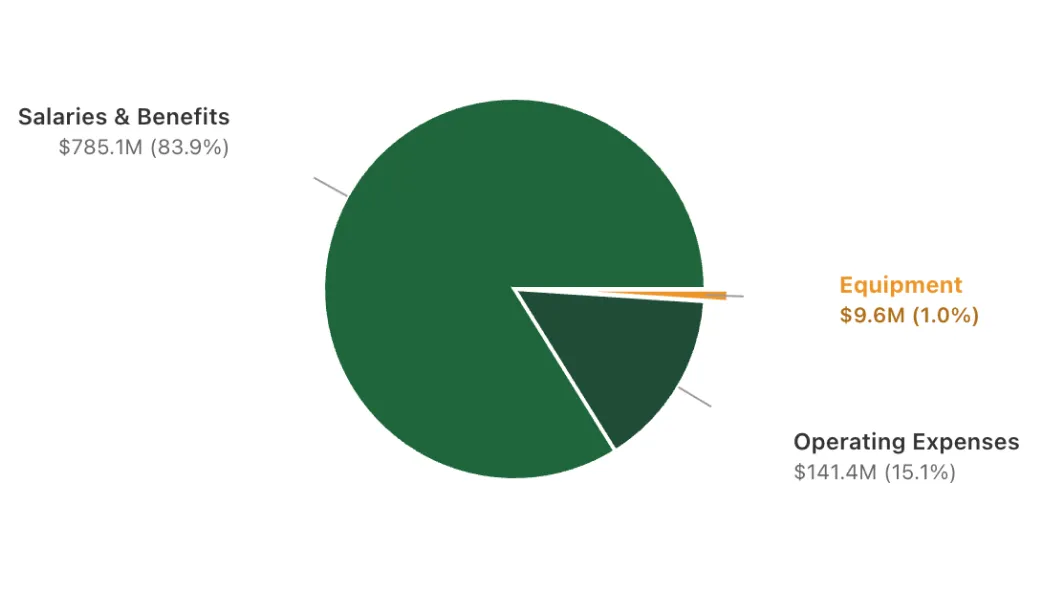
Here's where it actually goes: Salaries & Benefits, $785.1M (83.9%); Operating Expenses, $141.4M (15.1%); Operating Capital (Equipment), $9.6M (1.0%).
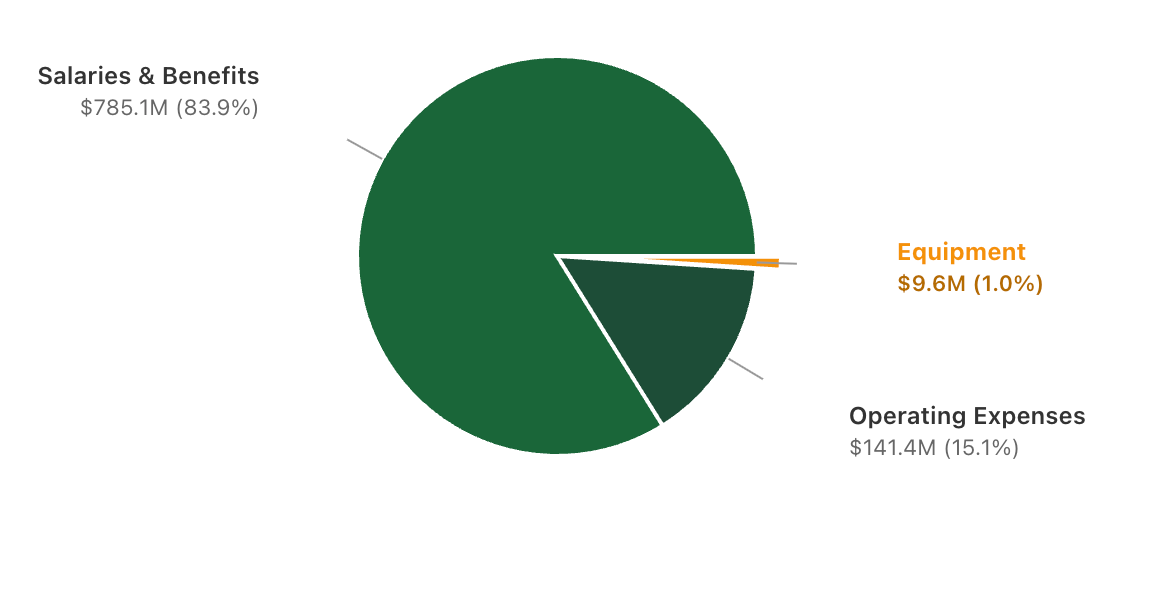
Read that last line again. Operating capital – the bucket that includes patrol cars, firearms, body armor, radios, drones, and every piece of tactical equipment those SHOT Show vendors are selling – accounts for one percent of the budget.
One percent.
Personnel costs devour 84 cents of every dollar before a single piece of equipment gets purchased. The remaining scraps get divided among thousands of hungry vendors.
And that $9.6 million has to cover a department-wide taser upgrade, a multi-year vehicle rebranding program, and the replacement of expired safety equipment across every bureau. The slice available for that revolutionary new optic or game-changing drone system is vanishingly thin.
It's a Volume Play, and the Numbers Are Brutal
There are approximately 18,000 law enforcement agencies in the United States: roughly 12,000 local police departments, 3,000 sheriff's offices, and the rest split between state, federal, and specialized agencies.
Each one operates under the same budgetary physics. Personnel takes 80-85%. Equipment fights for what's left. In Miami-Dade's case, that's 1%. In a good year, maybe 2%.
This isn't a market where you land one whale and retire. This is a market where you need to win dozens, maybe hundreds, of small contracts just to keep the lights on. The white whale, a major DOD (now DOW) contract, remains the dream. The law enforcement market is a grind, played one procurement cycle at a time.
The Procurement Puzzle
Here's what makes this even harder: you can't just show up with a great product.
Miami-Dade's capital budget reveals the complexity. Equipment purchases are scheduled years in advance, locked into planning documents most vendors never bother to read.
The vehicle rebranding program: $2.7 million allocated as part of a multi-year fleet transition. The electronic control device replacement: a department-wide upgrade to the latest TASER model, triggered by the expiration of existing equipment. A new district station in the south and west areas of the county, with the infrastructure team already juggling over 65 construction projects.
These aren't impulse purchases. They're planned 3-5 years out, funded through complex combinations of bonds, grants, impact fees, and inter-agency transfers. By the time a project hits the procurement phase, the specifications are locked, the funding is allocated, and the vendor selection process is already in motion.
If you're not in the conversation when the capital plan is being drafted, you're already too late.
What This Means for Vendors
Vendors win on intelligence rather than better products. That means learning procurement calendars, since Miami-Dade's fiscal year runs October through September with budget requests submitted in May and finalized by July 30, understanding funding sources and their differing constraints, tracking predictable replacement cycles such as expired TASERs, and building relationships before RFPs, while specifications are still being written.
The 20 new suppressor companies I saw at SHOT Show are competing for a fraction of a fraction of law enforcement budgets. Same for the drone manufacturers, the body camera startups, the tactical flashlight innovators.
The winners in this market aren't necessarily building better products. They're building better intelligence.
Know the procurement calendar. Miami-Dade's fiscal year runs October through September. Budget proposals are developed months earlier. The Sheriff submitted her initial request on May 1, 2025, with revisions finalized by July 30. This information is public. Many vendors are too busy to take the time to look.
Understand the funding sources. That vehicle rebranding program includes $2.7 million from operating capital plus inter-organizational charges allocated across multiple budget lines. Different funding sources have different constraints, timelines, and approval processes.
Track the operational triggers. The TASER upgrade is happening because existing equipment expired. Replacement cycles are predictable years in advance. If you know when a fleet of patrol rifles was purchased, you know when they'll need replacing.
Build relationships before RFPs drop. By the time a formal RFP is issued, the agency often has a preferred vendor in mind. The real sales work happens during the planning phase, when specifications are being written.
The Bottom Line
Walking the floor at SHOT Show, you see an industry convinced of its own enormity. And in absolute terms, it is enormous. Billions of dollars flow through law enforcement procurement annually.
But spread that across 18,000 agencies, each allocating 1-2% of their budget to equipment, and the math gets unforgiving fast. Add the complexity of multi-year capital planning, bond financing, and government procurement processes, and you understand why so many promising tactical companies flame out or pivot.
The vendors who survive aren't just good at building products. They're good at reading municipal budgets, tracking capital improvement plans, and showing up three years before the money moves.
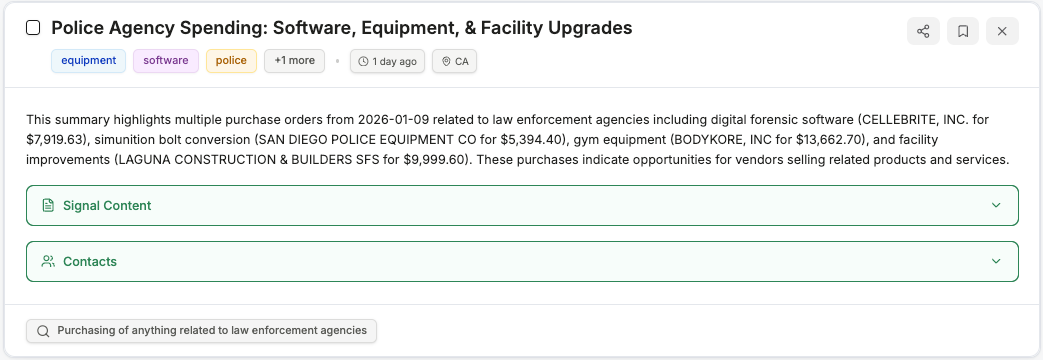
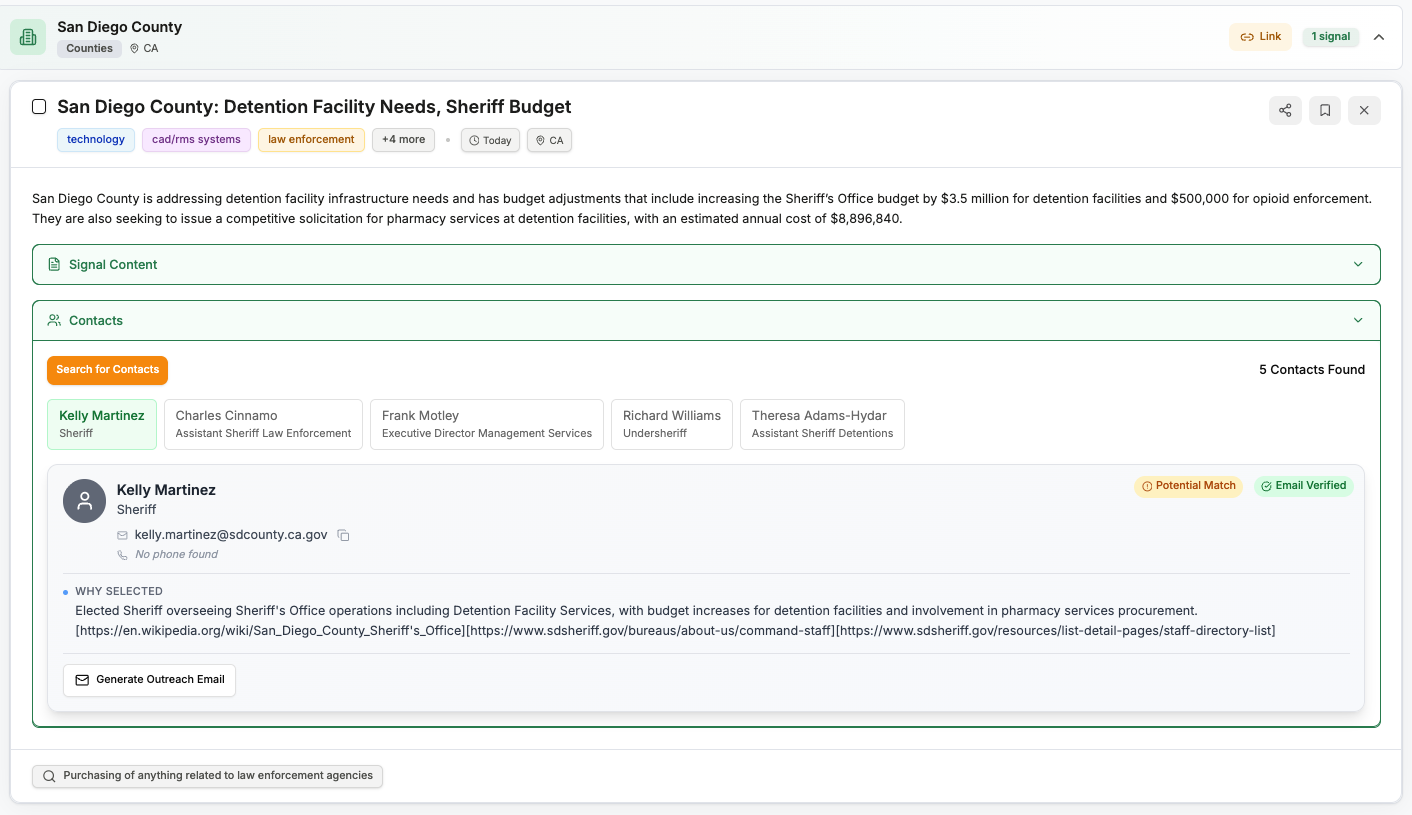
NationGraph can help the amazing innovators who showed up at SHOT Show with Signals, which provide predictive data on police purchasing decisions. Signals are tailored to the unique capabilities and products of the supplier and are derived from thousands of siloed public data sources, including:
- Council/Board meeting documents (agenda, meetings, etc.)
- Budgets and strategic planning documents
- Purchase orders, contracts, and RFPs
In a market this competitive, the product is table stakes. The real edge is knowing when the 1% gets spent, and making sure you're already in the room when it does.
The author attended SHOT Show 2025 in Las Vegas. Miami-Dade Sheriff's Office budget data is from the 2025-26 Revised Proposed Budget submitted July 30, 2025.




Find your first opportunity in minutes