Trends, Challenges and Opportunities for Public Sector Selling

This report synthesizes findings from 30 GovTech go-to-market leaders surveyed in Q1 2026. Respondents span functions and have an average of 10 years of experience selling to or serving government.
At a high level, the data reveal some weaknesses across go-to-market motions:
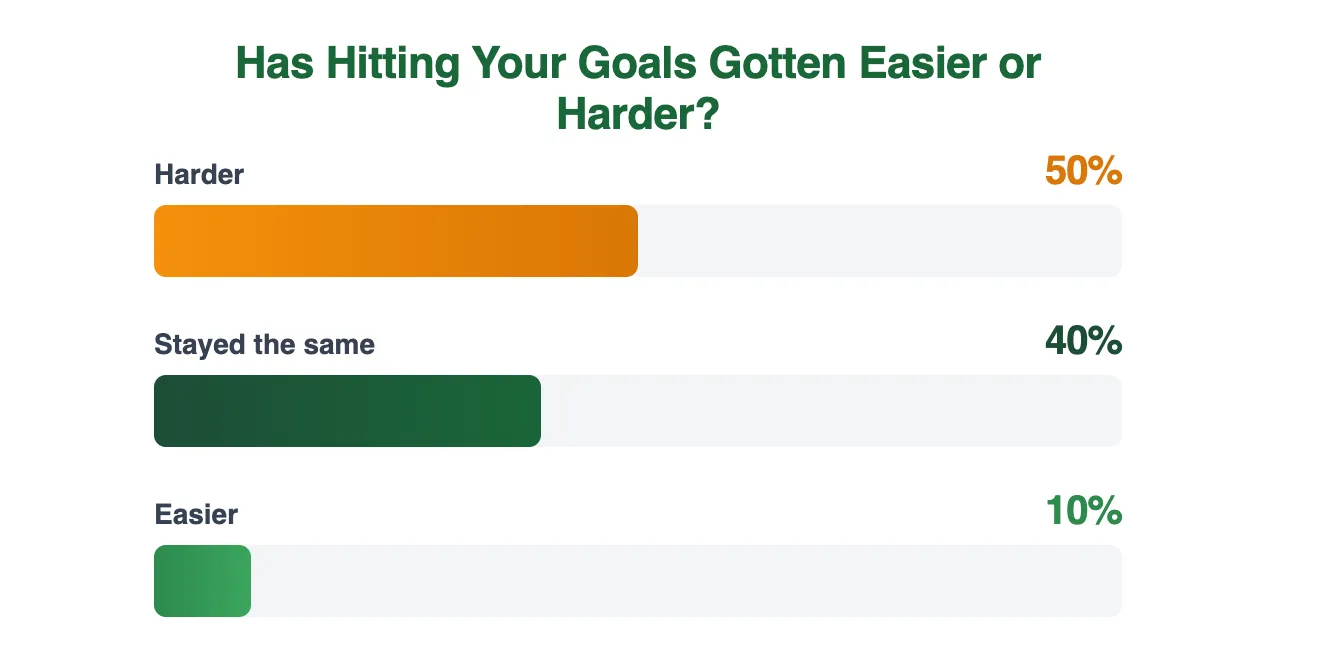
- Hitting goals has gotten harder for 50% of respondents
- Confidence in targeting and account intelligence is low
- AI adoption is uneven, and most use cases are shallow
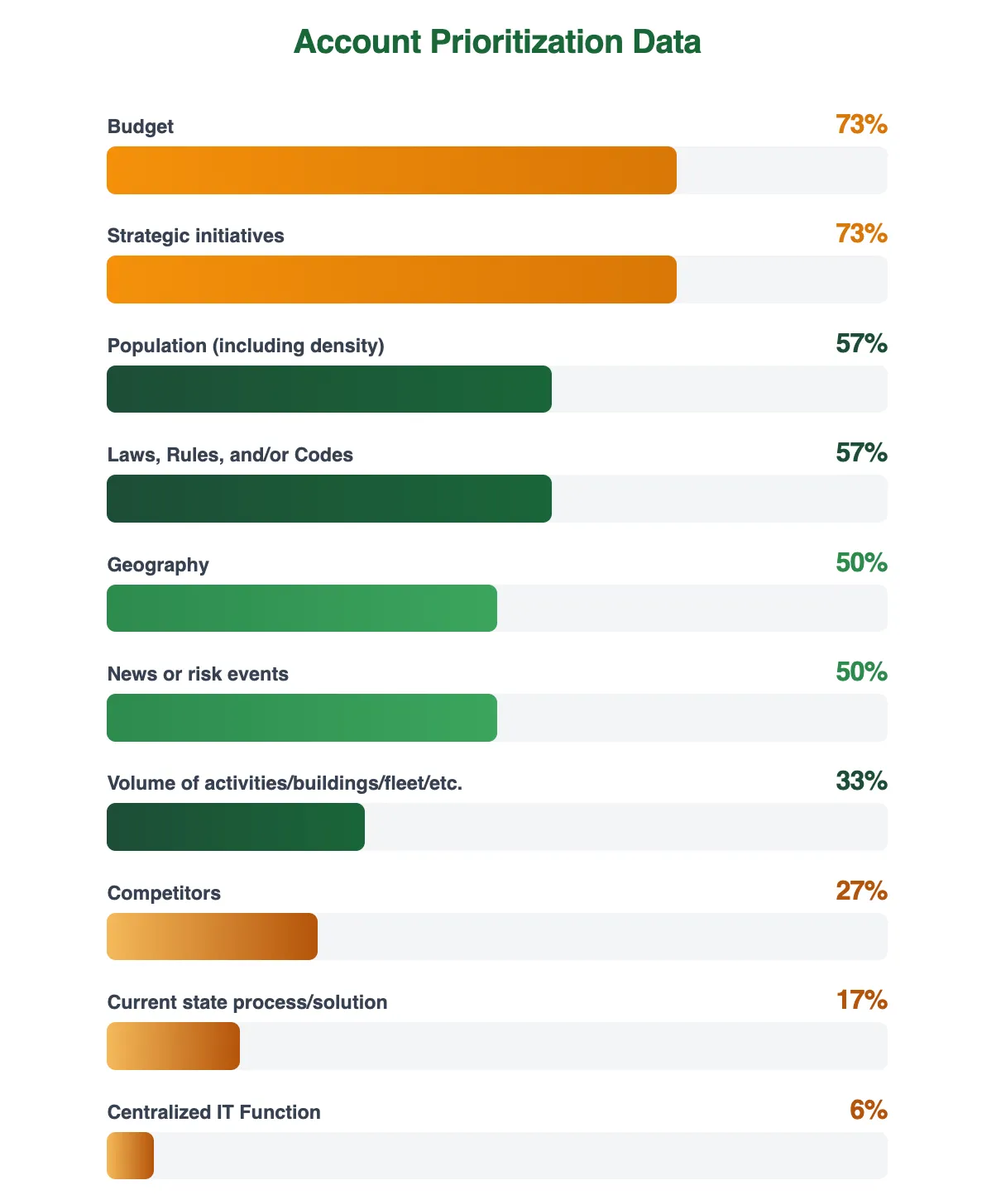
But also strengths: Teams are getting more focused. They are focusing on more than just population to identify ideal buyers, including factors like budget, strategic initiatives, and updates to policies or regulation.
Respondent Details
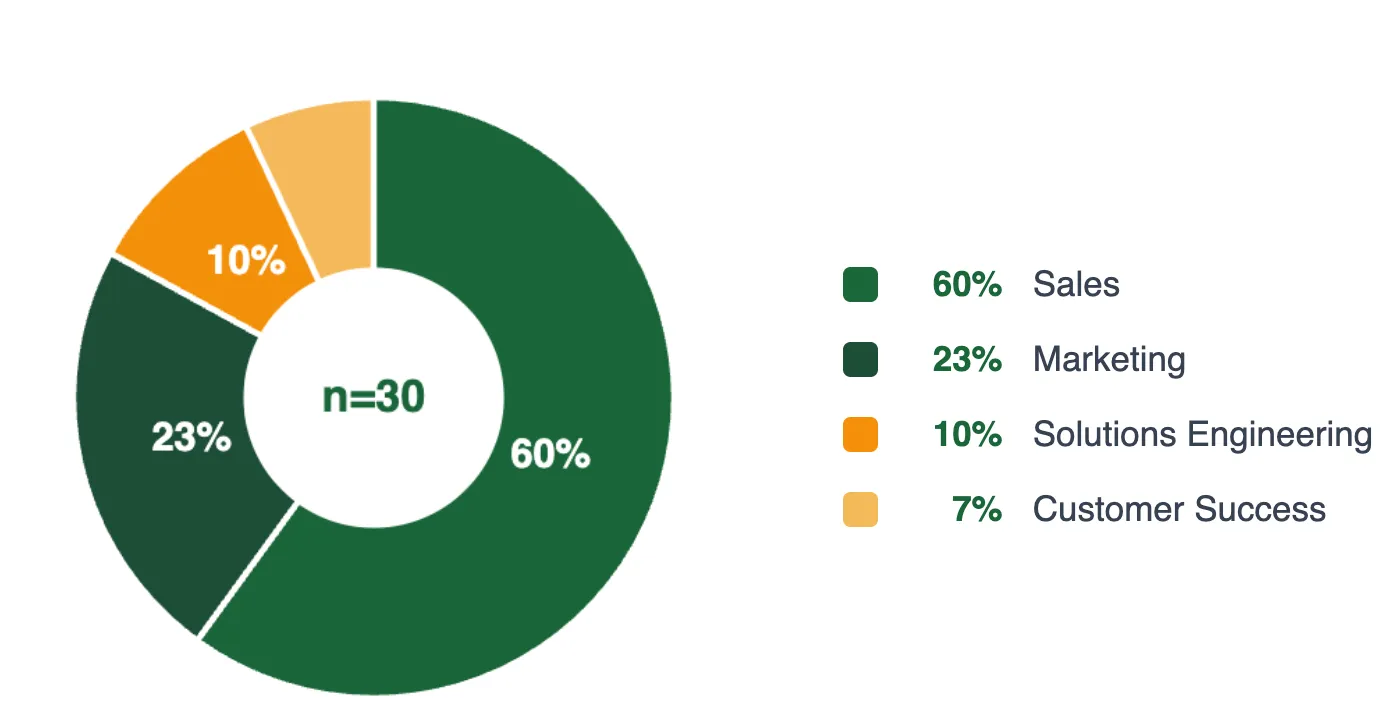
The 30 respondents represent a cross-section of govtech go-to-market leadership roles, with the majority in sales functions.
There were some org chart insights gathered from follow up conversations with respondents that mark a strategic shift:
- More marketing teams sit within the sales organization,
- No marketing leaders we spoke to managed SDR/BDR teams,
- Proposals teams are increasingly a stand-alone strategic function in Sales
The results were consistent across functions in the go-to-market organizations we surveyed.
Organization Details
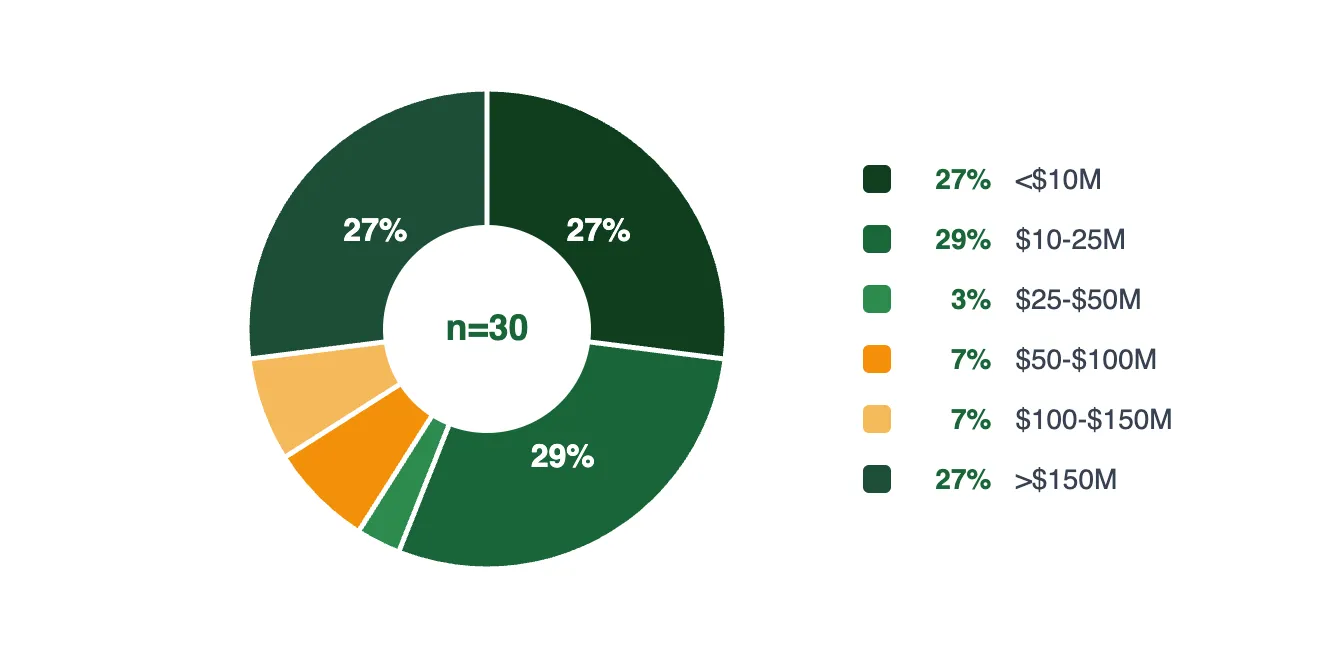
The survey respondents, like the GovTech 100 generally, skew to the smaller end of the market. This reflects the challenge of scaling in the market, as well as the increase of M&A activity. Several mid-market companies have been acquired or merged with peers to create larger entities that offer an enterprise platform. Three mid-market sized companies represented in our data had recently merged with a competitor.
The Market Challenge
Cities, counties, state agencies, schools and special districts became more proficient at buying software and technology solutions in the pandemic era, and that trend has continued; however, some headwinds are showing up as budgets have gotten less forgiving and with many new market entrants threatening more established govtechs.
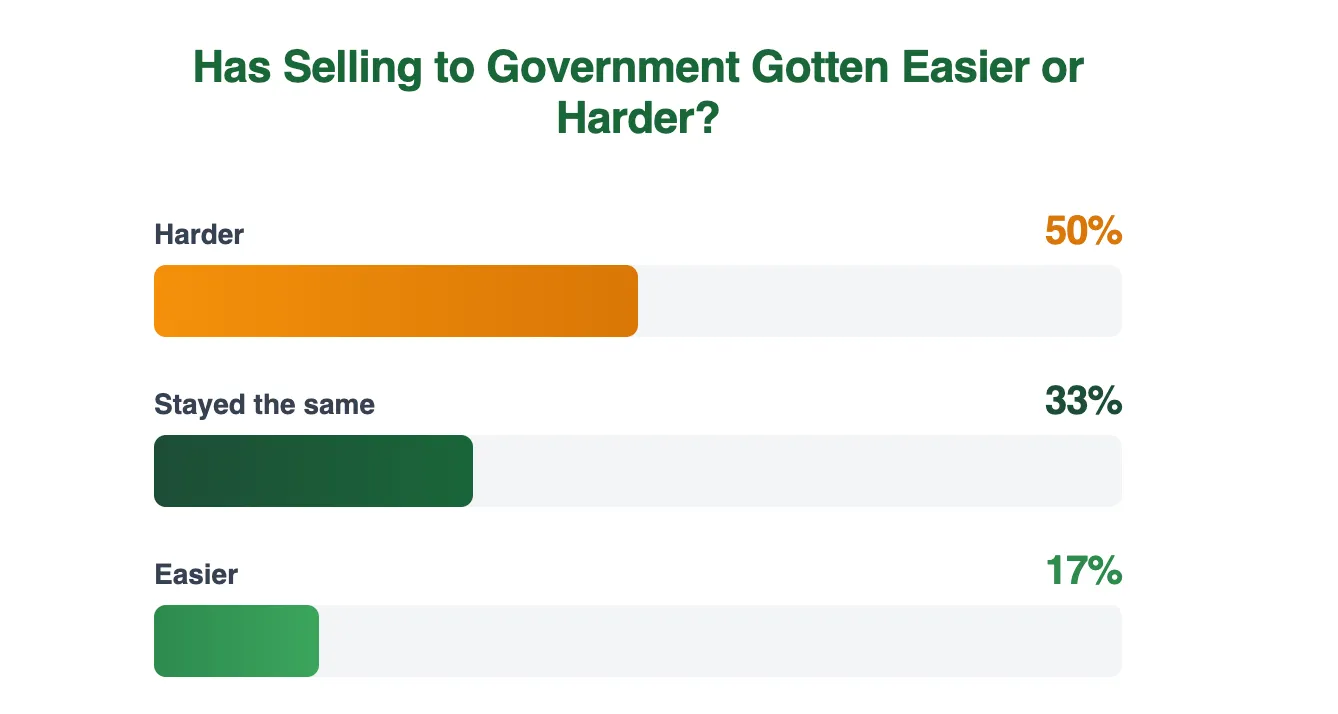
We see the downstream implication at the organization level in terms of the sentiment around goals. One revenue leader shared with us that sales cycle times are getting longer, and that it would be clear by mid-Q2 whether the majority of the sales team would hit goals.
Most leaders are hedging with headcount. Full-time employees are the most expensive investment that a company can make and these numbers are remarkable when compared to job losses in the private sector with the emergence of AI.
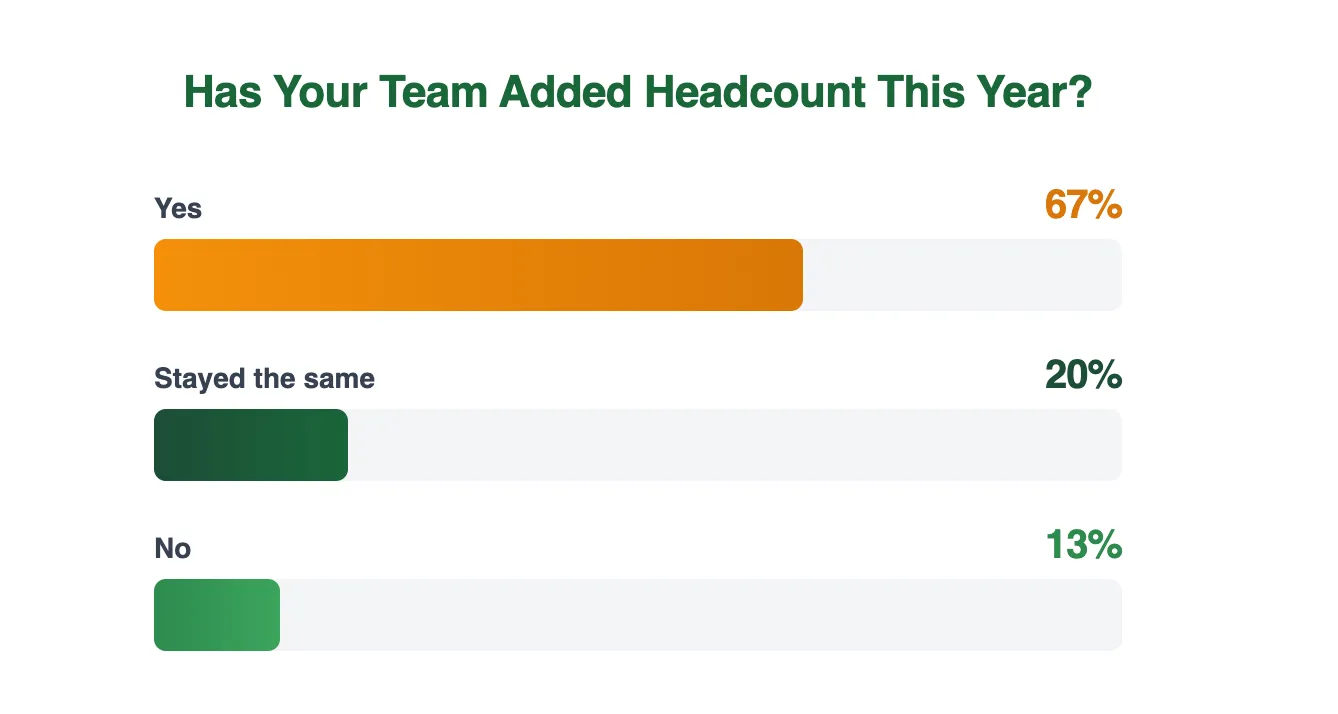
More than two-thirds of respondents report larger teams, yet 50% say hitting goals has gotten harder. More headcount may not translate into better revenue outcomes – the problem may not actually be capacity, but rather focus and intelligence.
The Organizational Challenge
With the push to expand go-to-market teams, we also see account lists growing. This isn’t the result of more governments, schools, or special districts being created (well, maybe special districts), but rather an expansion of the company’s SAM (Serviceable Addressable Market) or Product Market Fit (PMF).
Some companies report that they have gotten better at research and have surfaced more opportunities, but others may be selling to the wrong types of agency or buyer risking future churn.
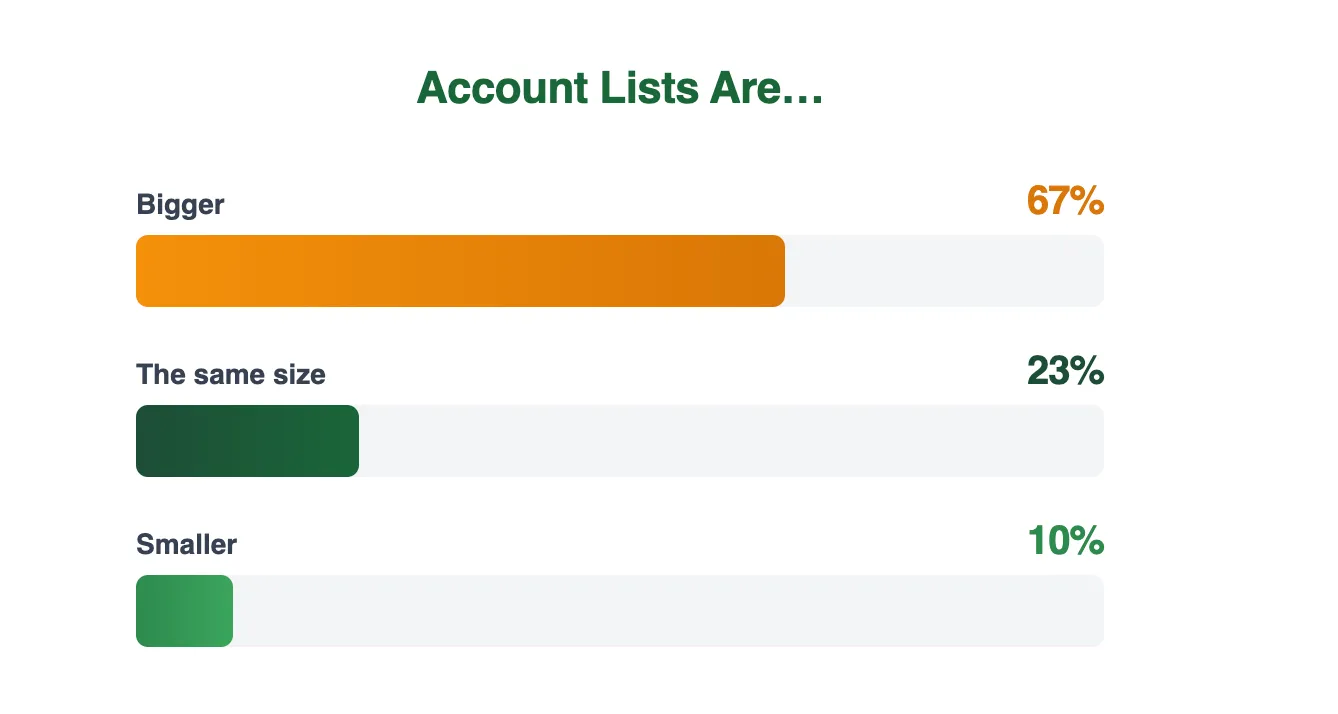
While sales leaders may care about the total value of all potential opportunities in a territory when they assign accounts and quotas, the real determinant of success is how many accounts an AE can effectively cover across a large territory or account list.
They also acknowledge that sellers can only effectively focus on 50 accounts at any given time.
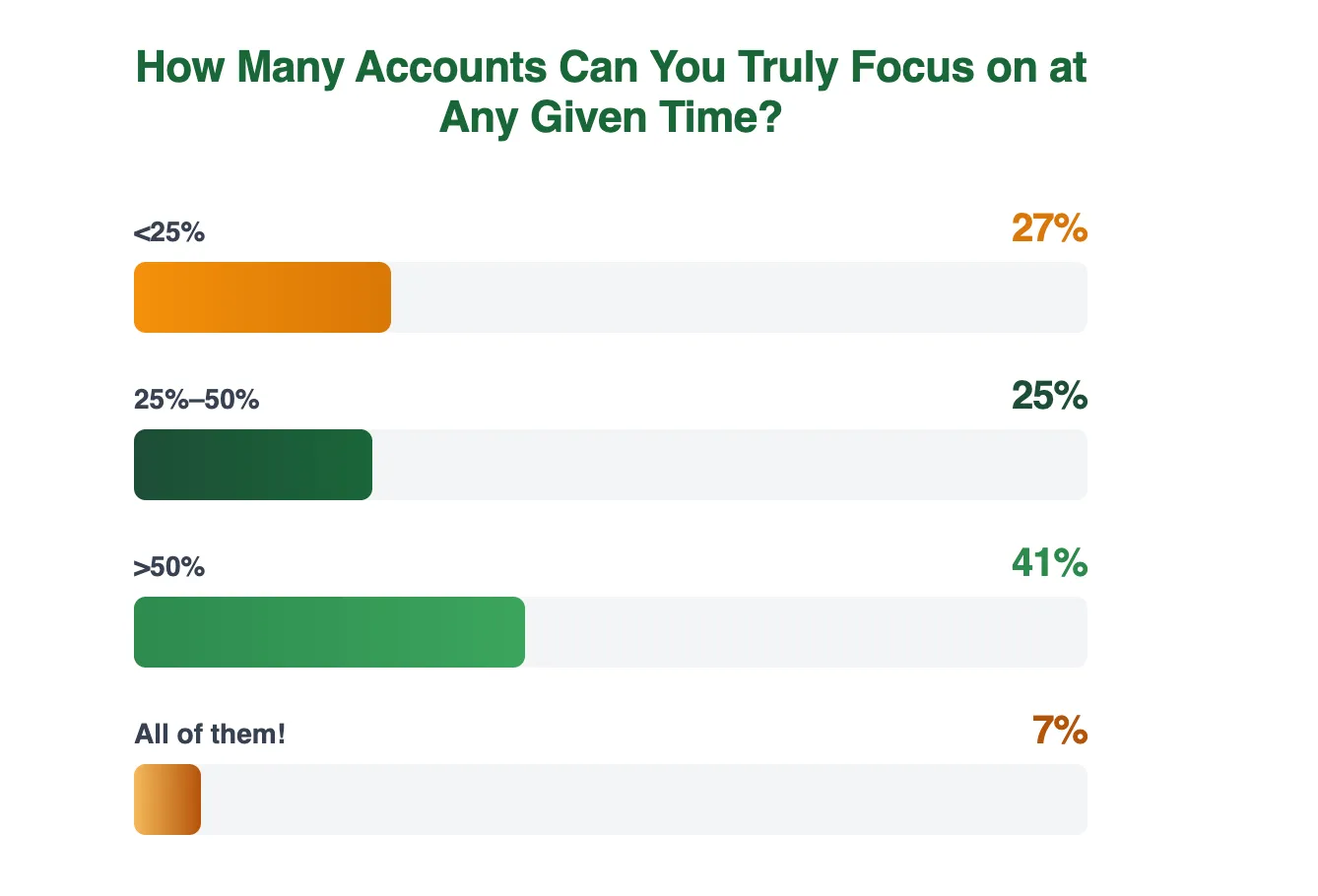
67% have bigger account lists, but only 7% say they can focus on all of them. The majority can cover half or fewer. This is the single biggest operational gap: growing territory without growing clarity.
Targeting & Intelligence Gaps
While leading govtechs have spent time analyzing where their product is a best fit and who their ideal customers are – in terms of title and use case – understanding gaps remain. Less than a third of respondents are very confident that they are targeting the right accounts and titles.
This is largely due to differences between states in terms of regulations and local requirements that may predetermine an outcome.
Reporting structures and mandates may also be tricky. It can be challenging to truly understand the unique purview of a department or agency, and larger agencies will even list several people with similar titles who may each have a different domain.
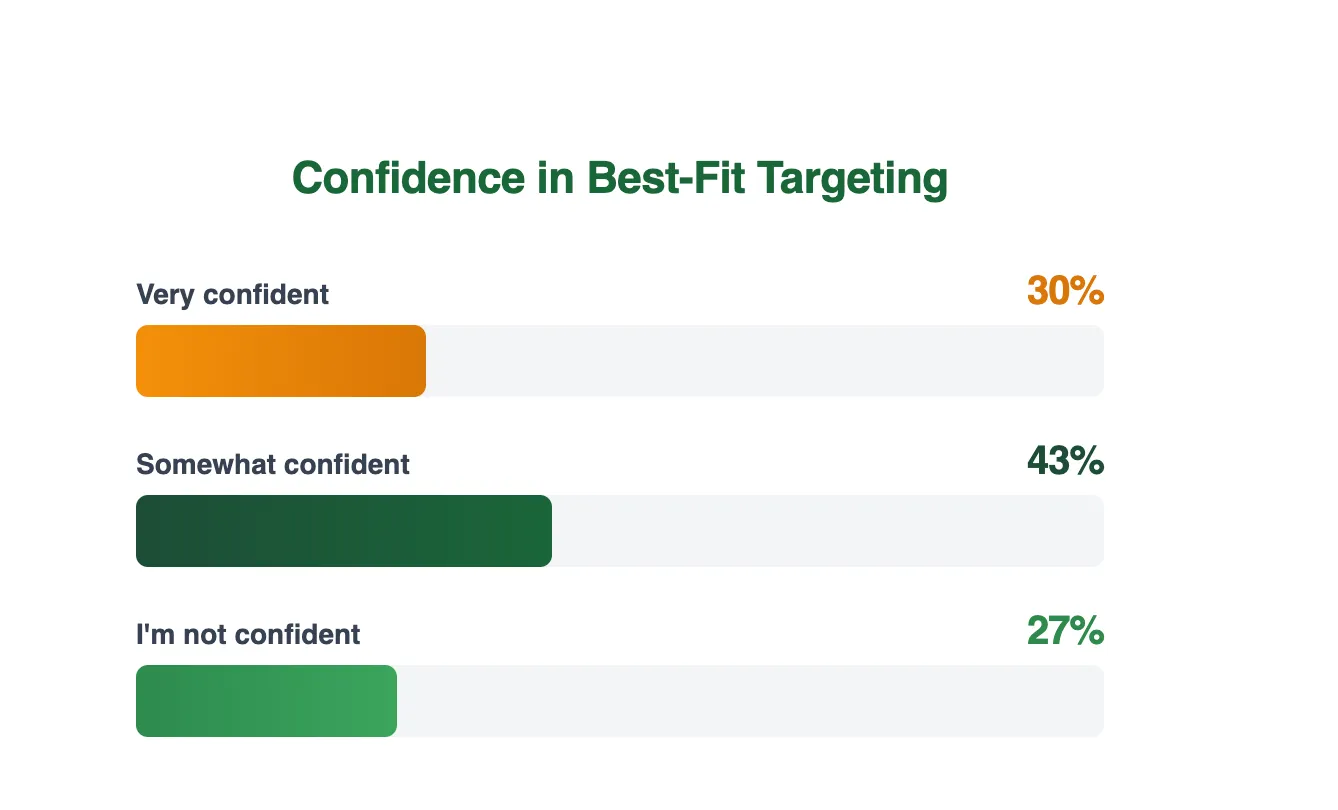
Complex sales generally require an understanding of the decision criteria, decision process, pain points, as well as who the champion and economic buyers are.
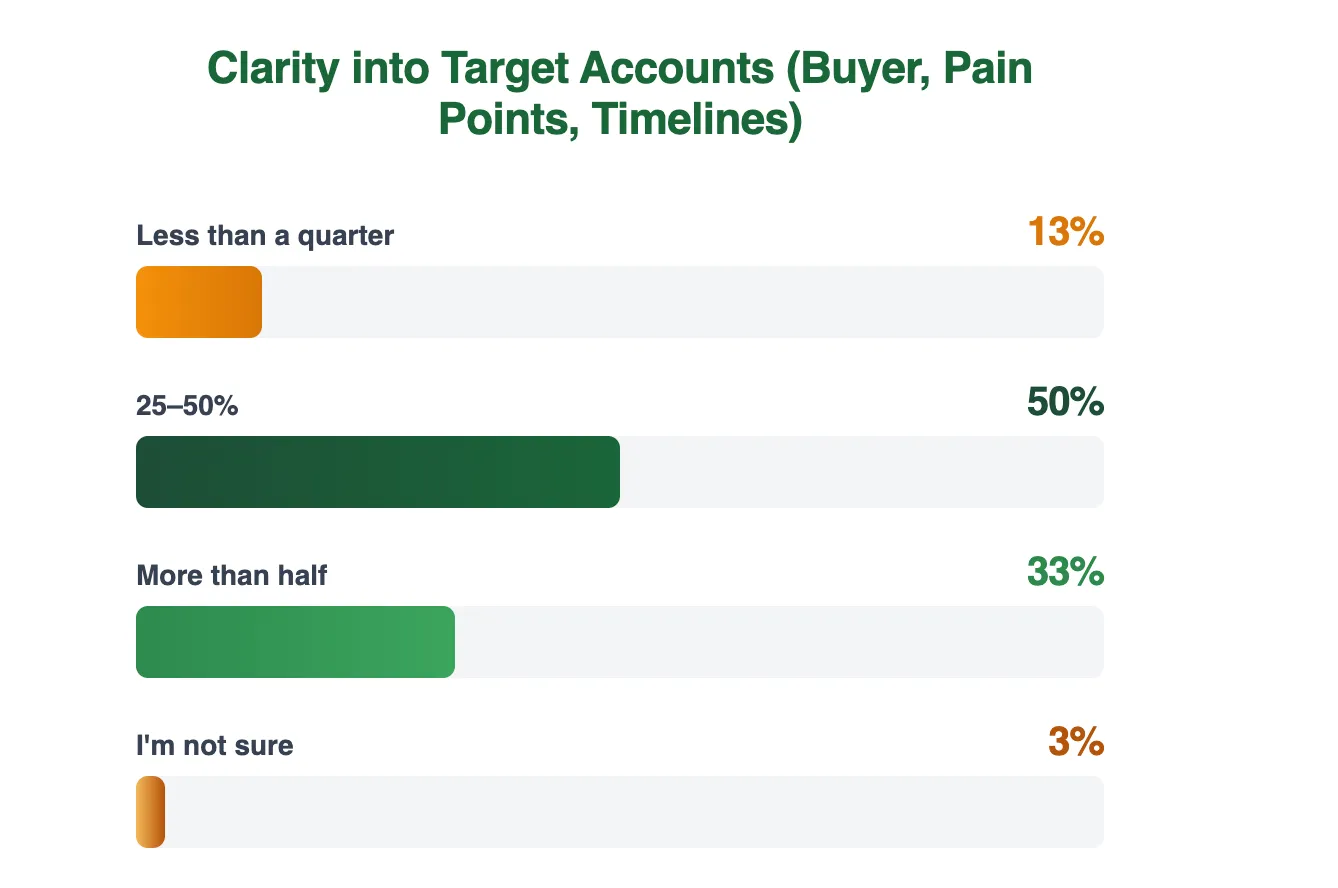
It follows that if teams aren’t fully confident that they are targeting the right accounts, they don’t have a deep understanding who the buyer is and their specific needs and processes.
The data show that go-to-market teams don’t have the full picture on a majority of their accounts.
Confidence in winning cold RFPs
The question which survey respondents displayed the lowest level of confidence was around cold RFPs, or those that they did not help to form.
The consensus across go-to-market teams is that you want to get ahead of the RFP and anticipate the opportunity. Many companies use contract vehicles as a way to avoid an RFP altogether.
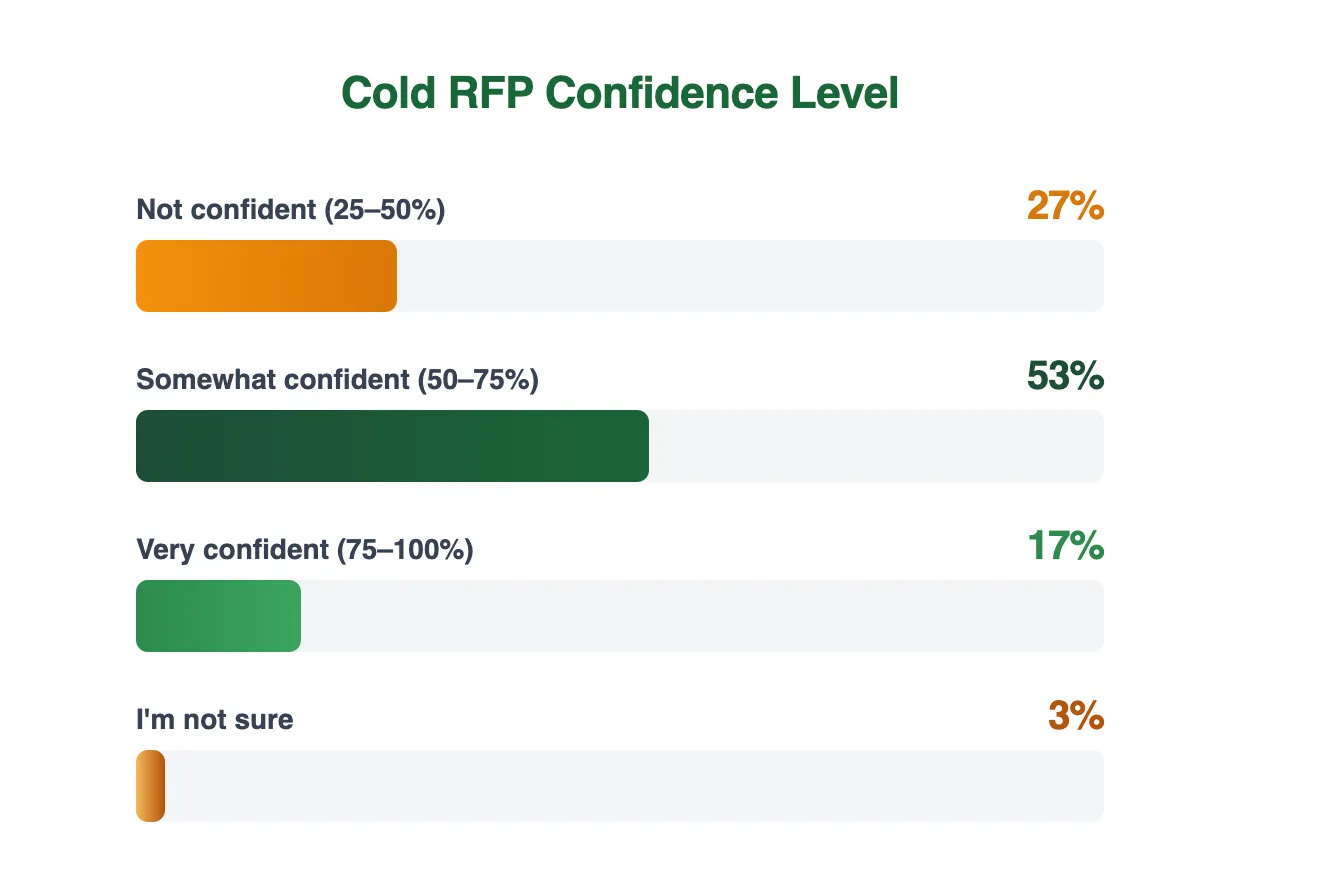
There appears to be an intelligence deficit: teams lack confidence in their targeting and have limited visibility into buyer identity, pain points, or purchasing timelines for the majority of their accounts. They also point to low confidence in RFP success when they did not help shape it.
Signals & Data That Drive Account Prioritization
The upside is that teams are getting focused. They are parsing their total addressable market across a number of variables that matter.
Population tends to be a blunt instrument for segmentation, but budget, regulatory change, and other key factors respondents listed can be meaningful determinants of deal success.
AI Adoption
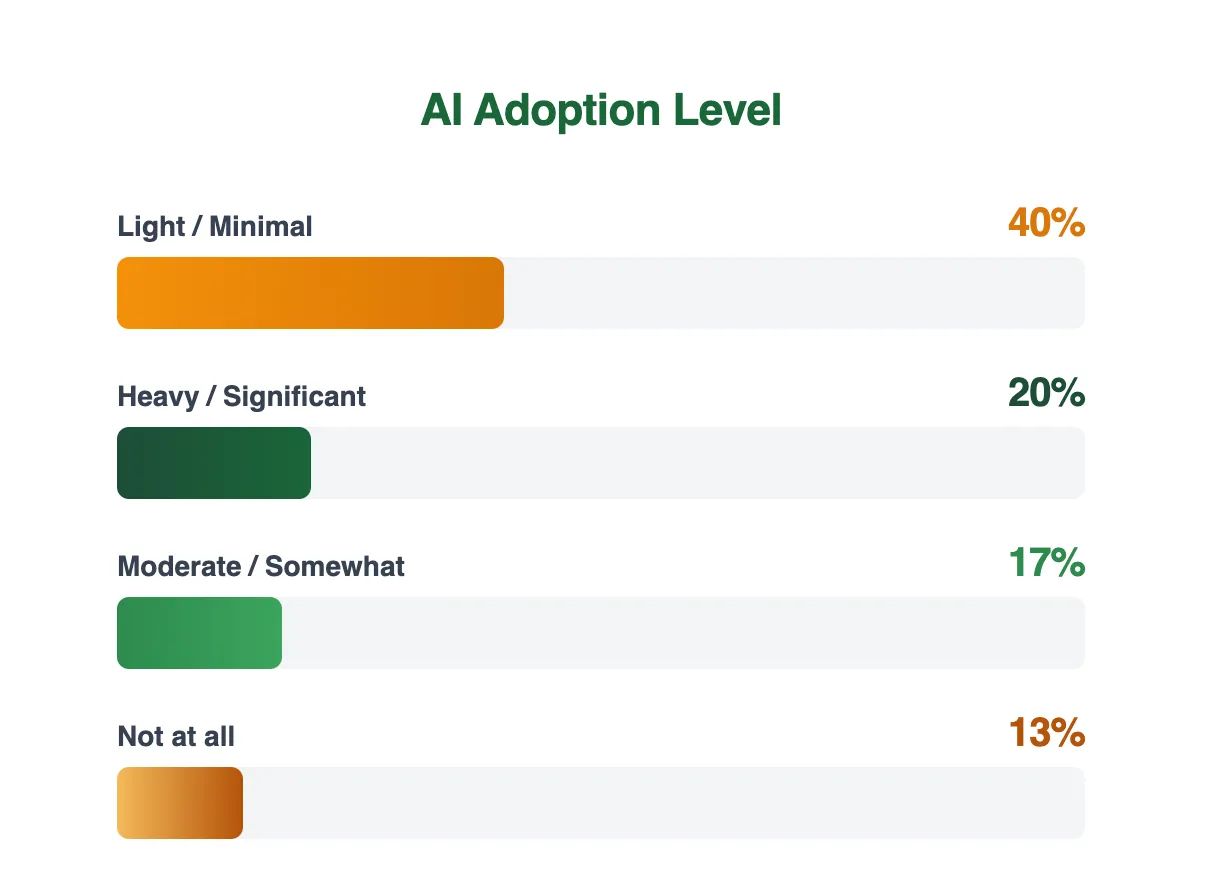
With the knowledge gaps revealed in the data, it was surprising to see that AI adoption has been uneven across govtech go-to-market teams.
AI can help bridge knowledge gaps to help improve targeting and focus, but while many mention using AI tools, the depth and integration varies considerably, and the primary use case is using AI to draft email copy.
AI for competitive intelligence, buying signal intelligence, and automated account scoring weren’t broadly used.
Key Takeaways
1. Account Prioritization is Broken
The majority of teams cannot meaningfully focus on most of their accounts. Account lists are growing, but intelligence is not keeping pace.
2. The Intelligence Gap is the Root Cause
Low confidence in targeting, cold RFP outcomes, and account clarity all trace back to the same issue: teams lack actionable intelligence about their government prospects. They know the signals they want (strategic initiatives, budget, regulatory change) but lack a consolidated, reliable source.
3. AI is an Opportunity, Not Yet a Solution
Most teams are using AI in shallow ways like outbound email drafting and basic research, rather than for account scoring, buying signal detection, competitive intelligence, and proactive alerting.
** We are so appreciative of all the incredible sales and marketing leaders who took time out of their busy day to talk about challenges and how they are thinking about their accounts.


.webp)
.webp)
Find your first opportunity in minutes